- 29 June 2026 16:45
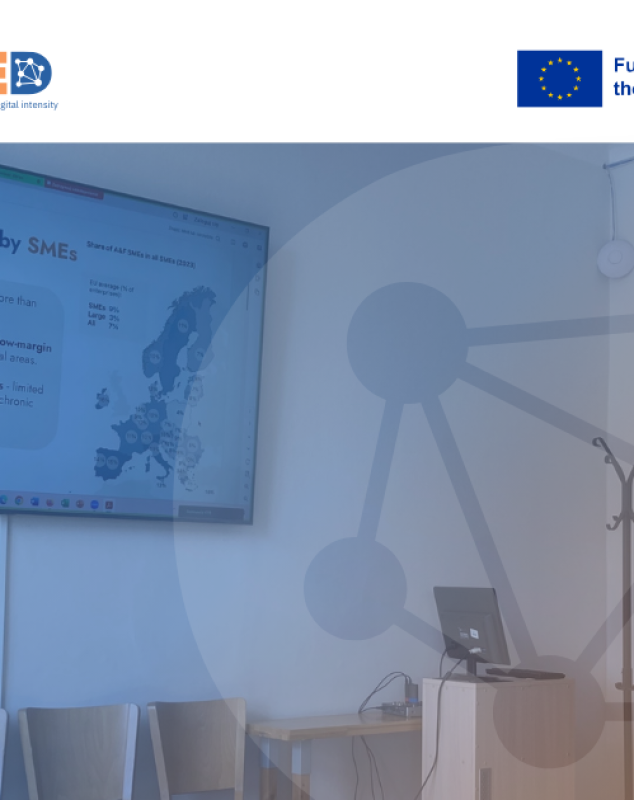
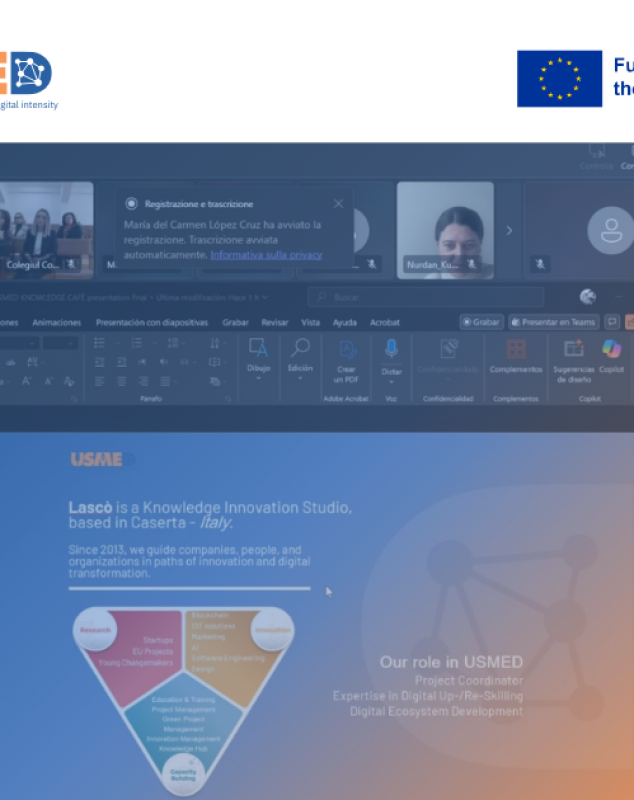
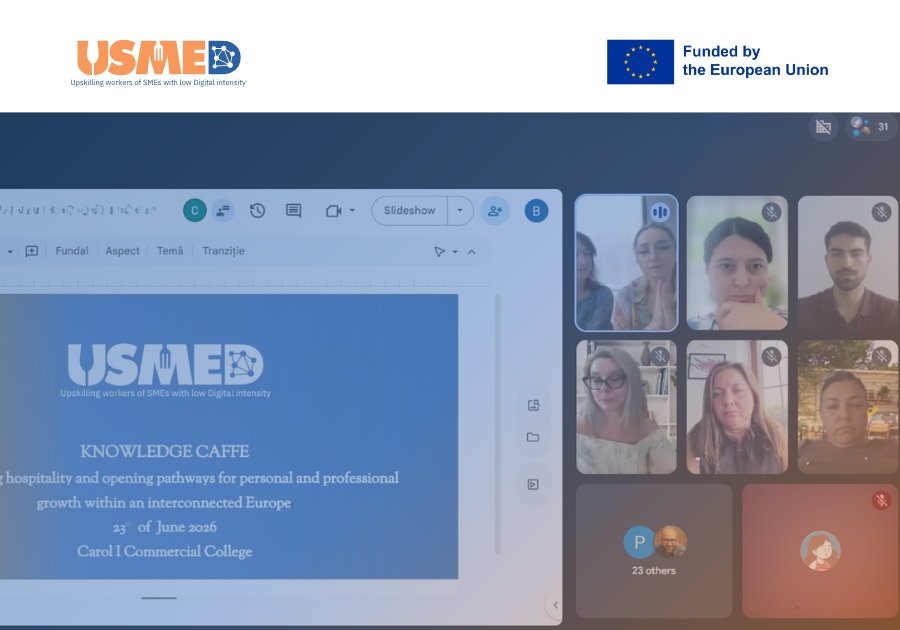
On 23 June 2026, the USMED consortium welcomed educators, researchers, VET providers, industry experts and stakeholders from Italy, Spain, Poland, Romania, Ireland, Germany and Türkiye for the 2nd USMED Virtual Knowledge Café.
The online event provided an opportunity to share project progress, exchange knowledge and strengthen collaboration around one common goal: supporting the digital transformation of the Accommodation & Food sector through innovative vocational education and training.
Designed as an interactive space for dialogue and knowledge exchange, the Knowledge Café highlighted the latest achievements of the project while encouraging participants to reflect on the challenges and opportunities of digitalisation for SMEs operating in one of Europe's least digitally intensive sectors.
Supporting the digital transformation of hospitality SMEs
The event opened with an overview of the USMED project and its mission to help small and medium-sized enterprises (SMEs) in the Accommodation & Food sector bridge the digital skills gap through accessible, practical and flexible learning opportunities.
Participants were reminded of the project's key objectives:
-
developing tailored digital learning resources for the hospitality sector;
-
aligning digital competences with European standards;
-
supporting sustainable digital transformation and increasing SME competitiveness across Europe.
The session also provided an update on the project's timeline and the collaborative work being carried out by the seven consortium partners.
Introducing the Digital Skills Assessment Tool (DSAT)
One of the highlights of the event was the presentation of the Digital Skills Assessment Tool (DSAT), developed by DELab UW – Digital Economy Lab at the University of Warsaw.
Specifically designed for the Accommodation & Food sector, the DSAT helps identify digital competence levels and skills gaps among different target groups, including managers, frontline workers, teachers and students. By providing a sector-specific assessment rather than a generic digital skills evaluation, the tool enables the creation of more relevant and personalised learning experiences.
The DSAT represents a fundamental step within the USMED methodology, ensuring that future training pathways respond directly to the real needs of hospitality professionals and vocational learners.
Building personalised Learning Pathways
Participants also received an update on the development of the USMED Tailored Learning Pathways, which will soon become part of the project's new Digital Infrastructure.
These personalised pathways will combine high-quality Open Educational Resources (OERs) into flexible learning journeys, allowing users to strengthen specific digital competences according to their assessment results and professional profile.
Together, these resources aim to provide practical, workplace-oriented training that supports both initial and continuous vocational education across Europe.
Valuable feedback from teachers and students
A particularly engaging part of the Knowledge Café was delivered by the Romanian partner Colegiul Comercial Carol I, which presented the results of a school-based research activity involving vocational teachers and students who tested the first USMED Open Educational Resources.
The findings were highly encouraging. Teachers appreciated the practical orientation of the learning materials while also providing constructive recommendations to further improve their usability and pedagogical effectiveness.
Students reported an overwhelmingly positive learning experience, highlighting several strengths of the resources, as interactive exercises and gamified activities; clear and well-structured content; practical examples directly connected to hospitality and tourism; resources that can support internships and future professional careers.
Many participants stated that the materials were already well-designed and easy to use, with several commenting that they would change "nothing" because the content was already clear, engaging and relevant.
The research also confirmed that learners perceive the USMED resources not simply as educational content, but as practical tools that can help them succeed in real workplace situations.
Learning through creativity: last Knowledge Café session
One of the most inspiring moments of the event came directly from the learners themselves.
A student from Colegiul Comercial Carol I presented an interactive educational game developed as part of the learning experience, demonstrating how digital creativity, engagement and practical application can successfully come together within vocational education.
The presentation showcased the project's learner-centred approach and illustrated how innovative educational methodologies can actively involve students while strengthening their digital competences.
By bringing together experts, educators, researchers and stakeholders from across Europe, the 2nd USMED Virtual Knowledge Café reinforced the project's commitment to creating practical, evidence-based learning opportunities that respond to the evolving digital needs of the Accommodation & Food sector.
A sincere thank you goes to all participants for their valuable contributions, insightful discussions and continued support. Together, we are building new pathways for digital upskilling across Europe.
For further information about the project and upcoming pilot activities: https://www.projectusmed.eu/en/contact
Share contents
Would you like to receive more information and follow all the results of the project?